
Named fish: track the weight and condition of your best-known fish
Every named fish at your fishery can now have its own PegPicker page, with its weight over time, photos season after season and every catch report it's been in.
 PegPicker24 November 2026 · 3 min read
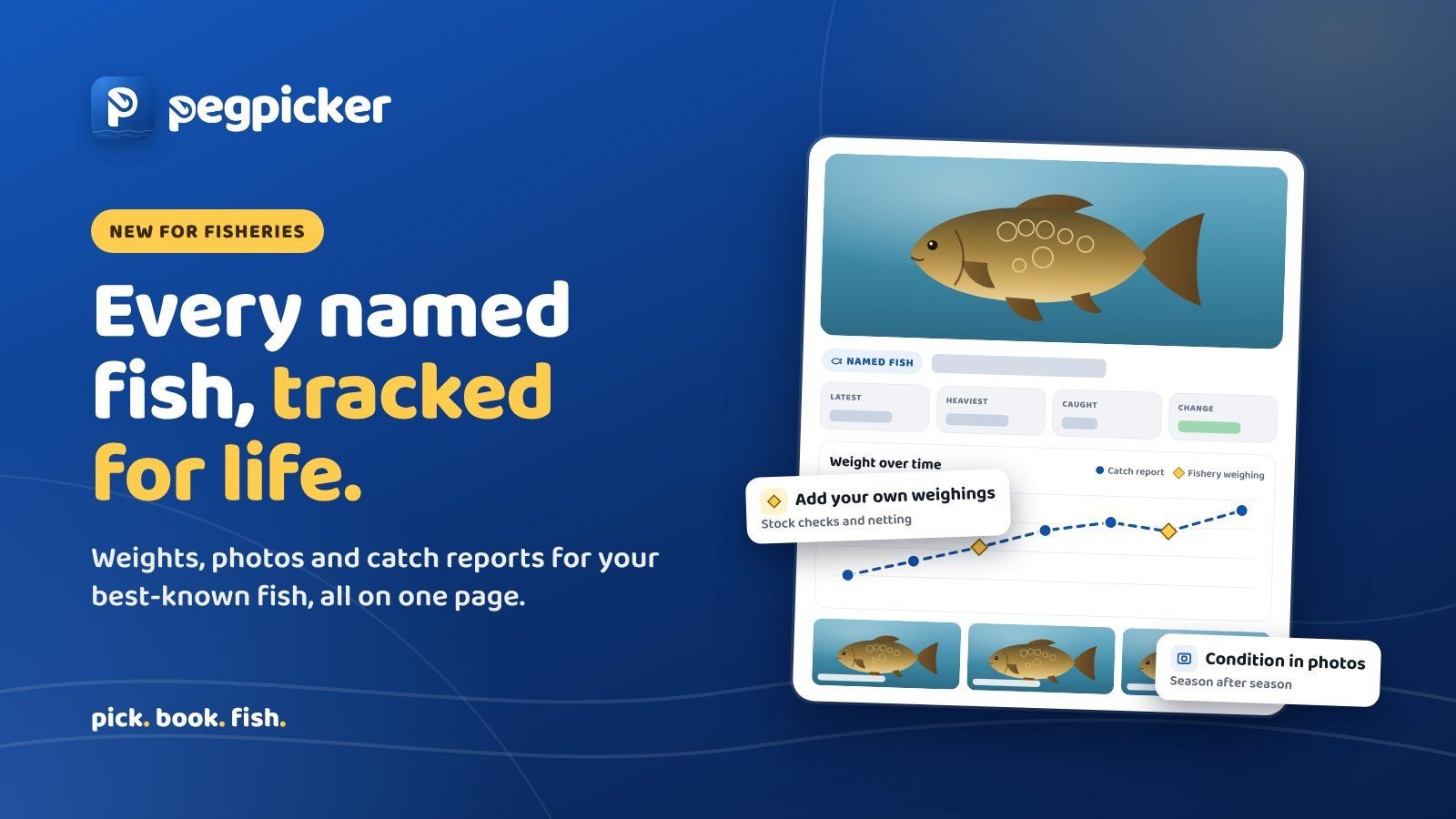
Most fisheries have a few fish everyone knows by name. Anglers travel to catch them, talk about them on the bank, and remember the day they finally banked one. Until now, the history of those fish has lived in old photos, social media posts and people's memories. PegPicker now gives every named fish its own page, so you can follow its weight and condition across its whole life.
What is a named fish page?
Each named fish at your fishery gets a page on PegPicker, linked from your fishery page. It brings together everything recorded about that one fish:
- Its weight over time, shown as a chart.
- Photos, yours and those from anglers' catch reports, newest first.
- Every catch report it has been tagged in, with the bait, method, peg and conditions on the day.
- The headline numbers: its latest weight, its heaviest, how many times it has been caught and how much it has changed since it was first recorded.
Your fishery page gets a new Named fish section too, with a card for each fish showing its photo, latest weight and how often it has been caught.
Weight across the life of the fish
The chart on each fish's page joins up every weight we have for it, in date order. Weights come from two places, so you can tell them apart:
- Blue dots are catch reports from anglers. Tap one to open that catch report.
- Yellow diamonds are your own weighings, for example from a stock check or when the lake is netted.
Over a few seasons the line tells a story. You can see when a fish is putting weight on steadily, when it levels off, when it drops back after spawning, and how it comes through each winter. A sudden drop that doesn't recover is easy to spot, and worth keeping an eye on.
Anglers' scales and weighing methods vary, so your own weighings matter. They give the chart fixed points you know you can trust.
Condition through photos
Weight is only half the picture. The photos on each fish's page come from your own uploads and from anglers' catch reports, in date order, so you can compare the same fish season after season.
That makes it much easier to check its condition over time: its fins and mouth, any marks or damage, how well something has healed, and how it looks before and after spawning. Fish welfare is something every good fishery cares about, and having every photo of a fish in one place helps you look after it.
How anglers tag a fish
When an angler logs a catch on PegPicker, there's a new box for the named fish. It suggests the fish you already have on that lake, so they can pick the right one. If they think they've caught a fish you haven't added yet, they can type its name instead.
Names are always saved with each word starting with a capital letter, so "the big common" becomes "The Big Common". That keeps your list tidy and stops the same fish appearing in different styles.
What fisheries can do in Manage
Everything is in Manage under Named fish. From there you can:
- Add your fish with their name, lake, species and a few words about them, such as how to tell them apart.
- Upload photos, several at a time, with the date they were taken and a caption.
- Record weighings with the date, weight in pounds and ounces, and a short note.
- See every catch report each fish has been tagged in, and unlink any where an angler picked the wrong fish.
- Merge duplicates if an angler spelt a name slightly differently. Their catch reports, weighings and photos all move across to the right fish.
- Hide a fish from your public page, or delete it.
Names added by anglers are marked so you can check them quickly.
Why it matters
For a fishery, named fish are part of what makes your water special. Having their history in one place helps you make better decisions about stocking, feeding and fish care. It also gives anglers something to come back for: the chance to add the next chapter to a fish's story.
Getting started
Log in to Manage and open Named fish. Add your best-known fish with a photo and their latest weight, and the rest builds up as anglers catch them. Each catch report they tag adds another point to the chart and another photo to the record.